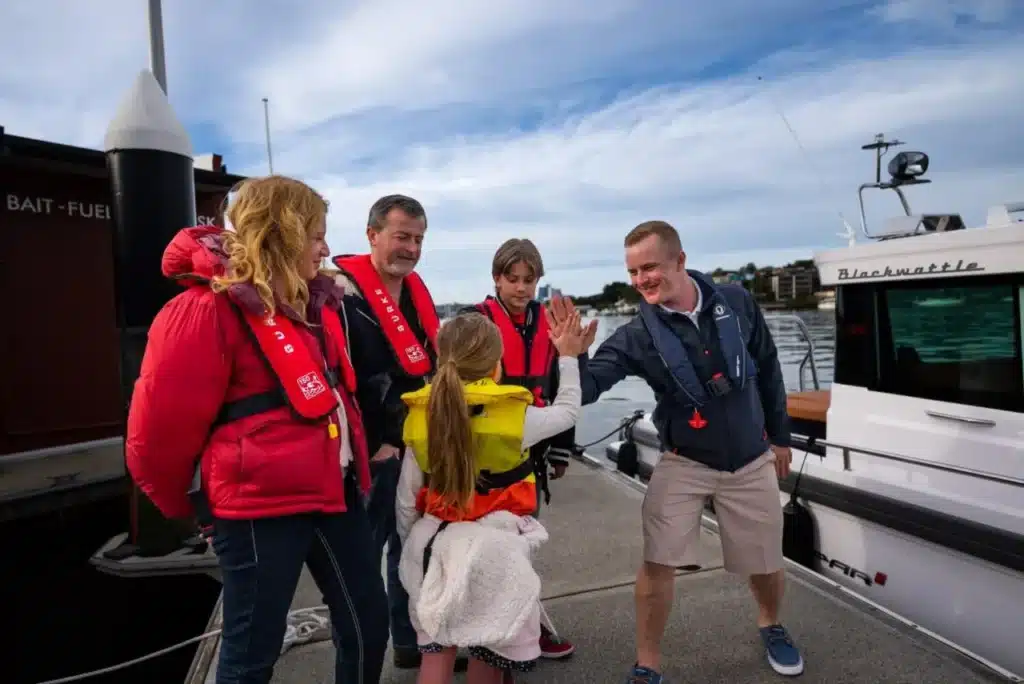
Taking children boating on Sydney Harbour can become one of the best parts of owning a boat. The safest days usually begin well before the lines come off: with correctly fitted lifejackets, a simple family briefing, suitable weather and a skipper who has already decided what will happen if conditions change.
This guide explains the practical steps BoatWise recommends for families boating in New South Wales. It complements, but does not replace, the current rules published by Transport for NSW. Requirements can change, so check the official guidance before departure.
Quick answer: how do you keep children safe on a boat?
- Use an approved lifejacket that is the correct level and size for each child.
- Explain the family boat rules before leaving the berth.
- Keep children seated in a safe position during departure, berthing and faster travel.
- Give one capable adult clear responsibility for supervising the children.
- Check the marine forecast, warnings, wind and return conditions.
- Keep children clear of ropes, the bow, the stern and the swim platform while engines are operating.
- Carry the required safety equipment and make sure adults know where it is.
- Choose a short, sheltered first trip and have an early return point.
Know the NSW child lifejacket rules
Lifejackets are the first place to start, but simply having one on board is not enough. It must be an approved type, suitable for the waterway, correctly sized and in good working condition.
Under the current NSW rules, children aged under 12 must wear a lifejacket:
- at all times on vessels up to 4.8 metres long; and
- in open areas of vessels up to 8 metres long while the vessel is underway.
Transport for NSW strongly recommends that children wear a lifejacket at all times on the water. The approved minimum level depends on where you are boating: Level 50S or above on enclosed waters and Level 100 or above on open waters. Other vessel, activity and heightened-risk rules can also apply.
Check the complete NSW children and lifejackets guidance and the separate NSW lifejacket wearing rules for your vessel and trip.
Fit matters as much as the label
A child should not be able to slip out of the lifejacket when it is lifted gently at the shoulders. Fasten every zip, buckle and strap exactly as the manufacturer intends. A crotch strap is recommended for children because it helps prevent the jacket riding up.
Do a fit check at home or beside the berth, not for the first time when the boat is moving. Let the child wear the jacket for a few minutes so you can identify rubbing, loose straps or restricted movement.
Lifejackets for infants
Infants need an approved lifejacket suitable for their weight that fits snugly and securely. Transport for NSW notes that the smallest Australian Standard lifejackets generally begin at 5 kilograms. If a baby is too small for an approved lifejacket, carefully reassess the vessel, weather and entire trip. If there is doubt, do not go out.
Inflatable lifejackets are not recommended for children under 12. A foam lifejacket in the appropriate level and size is usually the more suitable starting point, subject to the current rules and the manufacturer’s instructions.
Set five simple family boat rules
Children follow rules more easily when they are short, consistent and explained before the excitement begins. BoatWise recommends giving the whole family the same five rules:
- Lifejackets stay on until the skipper says they can come off.
- Ask before moving from one area of the boat to another.
- Stay inside the boat with hands, feet and heads clear of the sides and bow while underway.
- Hold on and stay seated when the skipper is departing, berthing or increasing speed.
- Tell an adult immediately if something falls overboard or anyone feels unwell or unsafe.
Avoid relying on shouted instructions in the middle of a manoeuvre. Brief the family while the boat is secure and the engines are off.
Choose safe seating before departure
Decide where each child will sit before you leave. The position should give them a secure seat and handhold, keep them within an adult’s reach where practical and keep them away from ropes, controls and working areas.
NSW rules prohibit passengers on powered vessels from extending any part of their body beyond the sides or bow while underway, except in limited situations permitted by the rules. Sitting on the bow rail, dangling legs over the side or moving around an open bow while the boat is moving can expose a child to falls, sudden wash and propeller danger.
The skipper should reduce speed whenever passengers cannot remain safely seated. A legal speed limit is not automatically a comfortable or safe speed for the people on board.
Assign one adult to supervise the children
During departure and berthing, the skipper needs to concentrate on the boat, traffic, wind, current and escape route. Another capable adult should supervise the children rather than simultaneously handling a line or fender.
Make the roles explicit:
- Skipper: controls the vessel and makes the safety decisions.
- Crew member: handles only the line or fender allocated by the skipper.
- Child supervisor: keeps the children seated, calm and clear of the working area.
If there are not enough adults to perform those roles safely, simplify the manoeuvre, ask marina staff for help or choose another day. Children should never be asked to jump from the boat or use their hands or feet to stop the boat contacting a berth.
Protect children around engines, ropes and the swim platform
The stern and swim platform deserve special attention. Never allow a child into the water or onto the platform while an engine is operating. Follow the engine and vessel manufacturer’s shutdown procedures and make sure the skipper controls when swimming begins and ends.
Keep children away from loose lines. A rope in the water can be drawn into a propeller, and a line under load can move suddenly. Before engaging gear, account for every line and make sure each one is fully inside the vessel or properly secured.
When picking up a mooring or anchoring, children should remain out of the working area. The boat hook, anchor chain and mooring line are not suitable jobs for small hands.
Check Sydney boating weather properly
A calm morning at the marina does not guarantee a calm return. Sydney Harbour, Middle Harbour and Pittwater can experience changing wind, ferry wash, traffic and local gusts around headlands, bays and marina structures.
Before departure, check:
- current marine warnings;
- the weather forecast for the entire trip;
- wind speed, direction and expected changes;
- waves or swell relevant to the planned waterway;
- tide times and how the tide may affect the berth, ramp or route; and
- the conditions expected when you return, not only when you leave.
Use the Bureau of Meteorology boating-safety guidance and the current marine forecast. Our detailed guide to reading boating weather explains how to turn that information into a practical go-or-no-go decision.
Prepare children for an emergency without frightening them
A short, calm briefing builds confidence. Show children:
- which adult they should listen to;
- where they should sit if something goes wrong;
- how their lifejacket works;
- why they should never remove it without permission; and
- that they must call out immediately if someone or something falls overboard.
The adults should know the location and operation of the vessel’s required safety equipment. The skipper should also tell a responsible person ashore where the boat is going and the expected return time. For suitable trips, log on with Marine Rescue NSW and remember to log off after returning.
Pack for comfort as well as compliance
Cold, sunburn, dehydration, hunger and seasickness can quickly turn a manageable trip into a distracting one. Pack drinking water, simple food, sun protection, warm layers and any personal medication required. Use shade where available, but do not let covers or loose items obstruct the skipper’s view.
Plan toilet stops and keep the first trips short. A successful 60-minute outing is better than a long day that leaves everyone tired and reluctant to go again.
A simple family pre-departure check
- Every child has the correct approved lifejacket and it has been fit-checked.
- The skipper has checked the forecast, warnings, return conditions and route.
- The vessel has the required safety equipment for the waterway.
- Children know the five family rules and their safe seats.
- Adults know their skipper, crew and supervision roles.
- All lines, fenders and loose equipment are prepared and controlled.
- Water, food, sun protection, warm clothing and medication are aboard.
- A responsible person ashore knows the plan and expected return time.
- The skipper has an alternative destination and an early-return point.
Frequently asked questions
Does a child have to wear a lifejacket on Sydney Harbour?
It depends on the child’s age, vessel length, location on the vessel and whether the vessel is underway. Children under 12 must wear one at all times on vessels up to 4.8 metres and in open areas of vessels up to 8 metres while underway. Other lifejacket rules can also apply. Transport for NSW strongly recommends that children wear one at all times on the water.
Can a child use a swimming vest instead of a lifejacket?
No. A swimming aid or learn-to-swim vest is not automatically an approved lifejacket. Check the approval markings, level, size and intended use.
Can children sit in the bow of a bowrider?
Only when the seating is designed for passengers and the skipper can operate within all applicable rules and conditions. Passengers must keep their bodies inside the vessel while underway. The skipper must also consider speed, wash, wind, waves, visibility, safe handholds and the child’s ability to remain seated.
Should children wear inflatable lifejackets?
Transport for NSW does not recommend inflatable lifejackets for children under 12. Use an approved jacket appropriate to the child, activity and waterway, and follow the manufacturer’s fitting instructions.
What is the best first family boating trip?
Choose a short trip in sheltered water, during suitable weather, with a simple departure and return. Avoid making the first outing a long passage, a busy holiday afternoon or a difficult marina manoeuvre.
Build family confidence on your own boat
Every family, vessel and marina setup is different. BoatWise Private Boat Tuition takes place on your boat and can cover the skills that make family days calmer: pre-departure routines, crew briefings, docking, wind and current, anchoring, navigation, onboard systems and emergency readiness.
If you have just bought your first vessel, use our NSW new boat owner guide to plan the next steps.
About the author
Tristian Mooney is the founder, captain and head trainer of BoatWise. He has spent 12 years working in the maritime industry across practical boat handling, vessel operations, training and luxury-vessel management. BoatWise provides practical training on Sydney Harbour and personalised tuition aboard clients’ own vessels. Learn more about Tristian and BoatWise.
Last reviewed: 11 August 2026. Always confirm current NSW boating rules before departure.