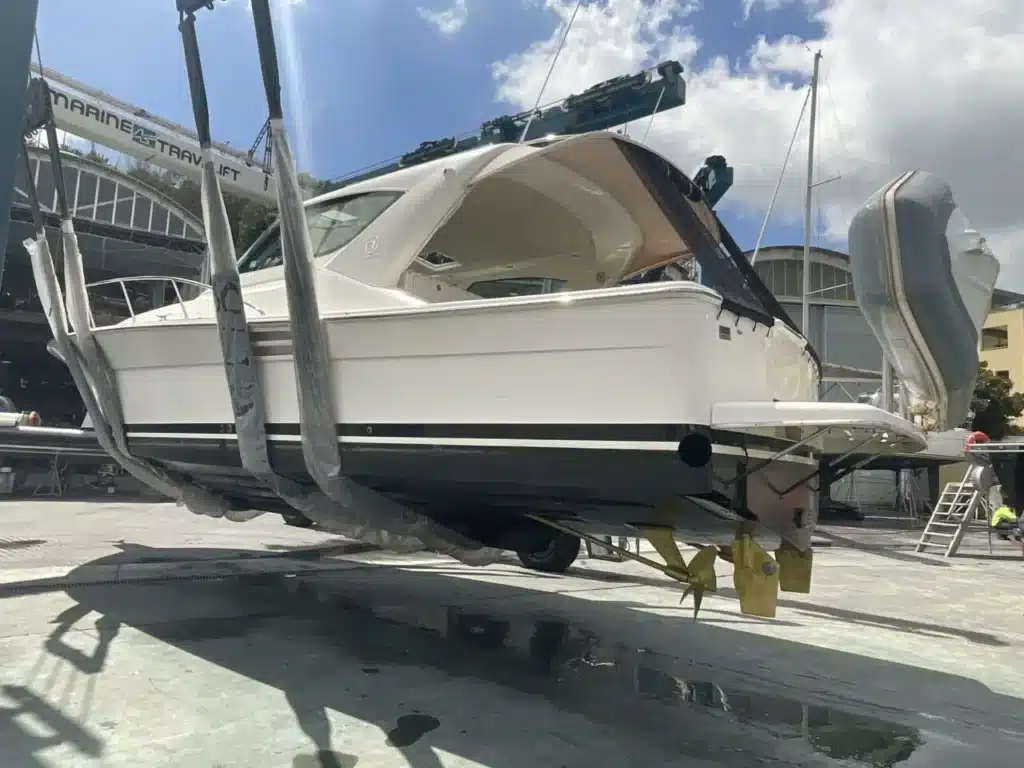
A used boat can look immaculate at the marina and still hide expensive structural, mechanical, electrical or ownership problems. A proper pre-purchase process separates four different checks: the vessel’s identity and financial interests, a marine survey, mechanical inspection and an on-water sea trial.
This NSW used-boat checklist helps buyers organise those checks in the right order. It is general guidance, not a substitute for an independent accredited surveyor, qualified marine mechanic, electrician, lawyer, insurer or finance provider.
Used boat inspection checklist at a glance
- Define the intended use, waters, crew and total budget.
- Verify the seller, registration, Hull Identification Number and records.
- Complete current NSW registration and PPSR checks.
- Make any offer subject to satisfactory checks where appropriate.
- Engage an independent marine surveyor.
- Arrange a separate mechanical inspection and diagnostics.
- Test electrical, plumbing, safety and navigation systems.
- Complete a meaningful sea trial.
- Inspect the trailer, tender and included equipment separately.
- Confirm insurance, storage, transfer and future ownership costs.
1. Start with how you will use the boat
Before inspecting a particular boat, write down the job it needs to do. A vessel for sheltered family trips on Sydney Harbour has different priorities from one intended for offshore fishing, overnight cruising, watersports or frequent trailering.
Define:
- normal passenger numbers and the needs of children or less mobile people;
- enclosed-water, coastal or offshore use;
- typical trip distance and fuel availability;
- overnight accommodation, toilet and freshwater needs;
- marina berth, swing mooring, dry stack or trailer storage;
- bridge, depth, beam, height and weight limitations;
- the propulsion system you can operate and maintain; and
- your realistic annual maintenance and upgrade budget.
A well-maintained boat that does not suit its intended waterway or storage arrangement is still the wrong purchase.
2. Inspect the documents before the boat
Ask the seller for documents early. Missing records are not proof of a defect, but they increase uncertainty and may prevent you verifying ownership, maintenance or major work.
Request, where applicable:
- current vessel registration certificate;
- Hull Identification Number (HIN or Boatcode) certificate;
- seller identification matching the registration and sale documents;
- purchase invoices or other ownership history;
- engine and generator serial numbers;
- service invoices, logbooks and engine-hour records;
- previous surveys and repair reports;
- receipts for repower, electronics, structural work and upgrades;
- equipment manuals and warranty documents;
- trailer registration and VIN details;
- mooring, marina or storage information; and
- an inventory stating exactly what is included.
Compare numbers on the documents with the physical HIN, registration markings, engine plates and trailer VIN. Resolve any mismatch before paying a deposit or proceeding.
3. Complete NSW registration and PPSR checks
A NSW vessel registration check and a PPSR search answer different questions.
Check NSW vessel registration
The free Service NSW vessel registration check shows the expiry and whether the registration is current, expired or cancelled for vessels previously or currently registered in NSW. It is not a complete ownership, condition or finance check.
Search the PPSR using the correct HIN
The Australian Government PPSR boat search can show security interests registered against the HIN or official number searched. Enter the identifier carefully and retain the certificate. The PPSR recommends searching immediately before purchase so the result is current.
A watercraft PPSR search does not tell you the boat’s make, model or registration status, and it does not report whether the vessel is stolen or badly damaged. It also does not include a separate outboard motor or trailer search automatically. A trailer should be checked using its VIN through the appropriate motor-vehicle search, and additional searches may be relevant to a separately financed engine or seller.
If a security interest appears, do not assume the seller’s promise to clear it is enough. Obtain appropriate advice and written evidence of discharge before settlement.
4. Put inspection conditions in writing
Before paying a significant deposit, understand the sale terms. Depending on the transaction, an offer may need to be subject to satisfactory survey, mechanical inspection, sea trial, finance, insurance and clear title checks.
Record:
- the agreed price and deposit;
- exact vessel, engine, tender and trailer identifiers;
- the included inventory;
- who pays haul-out, survey, mechanic, fuel and relaunch costs;
- deadlines for each inspection and report;
- what happens if a material defect is found;
- when the deposit is refundable or released;
- the settlement and handover process; and
- the condition and location in which the vessel must be delivered.
Private sales and dealer sales can involve different rights and contracts. Obtain legal or consumer advice if the terms, ownership structure or deposit conditions are unclear.
5. Engage an independent marine surveyor
A marine survey concentrates on the vessel’s condition and suitability within the survey’s agreed scope. The surveyor should be independent of the seller and chosen by the buyer.
Before appointing one, ask:
- what qualifications, professional membership and insurance they hold;
- whether they regularly inspect this hull material and vessel type;
- whether the boat must be hauled out;
- which systems and areas are included or excluded;
- whether moisture testing, percussion testing or other tools are appropriate;
- whether they attend the sea trial;
- what the written report and photographs will contain; and
- whether the report is suitable for an insurer or lender, if required.
No survey can expose every concealed or future defect. Tanks, stringers, wiring, fasteners and machinery may be hidden behind linings or structures that the seller will not permit to be dismantled. Read the scope and limitations, not only the summary.
6. Inspect the hull, deck and structure
The surveyor will determine the correct process for the construction material, but a buyer should understand the main areas being considered.
Out of the water
- Hull shape, impact damage, cracking, blistering, corrosion or repairs.
- Keel, chines, strakes, transom and structural supports.
- Through-hull fittings, seacocks, strainers and underwater exhausts.
- Propellers, shafts, skegs, sterndrives, outboards and rudders.
- Bearings, seals, anodes and evidence of electrolysis or galvanic corrosion.
- Antifouling condition and marine growth.
- Evidence of grounding, osmosis, water ingress or poorly documented repair.
Deck and interior
- Deck stiffness, moisture, cracks and fittings that move under load.
- Chainplates, rails, cleats, bollards and anchor hardware.
- Windows, hatches, seals and staining from leaks.
- Bilges, limber holes, pumps and unexplained water, oil or fuel.
- Bulkheads, engine beds and visible structural bonding.
- Doors and joinery that may reveal movement or distortion.
- Fuel, freshwater, holding and waste tanks where accessible.
A freshly detailed bilge or new coating is not automatically suspicious, but it can hide evidence that would otherwise help explain a leak. Ask when and why work was completed.
7. Arrange a separate mechanical inspection
A hull survey is not necessarily an engine survey. Engage a qualified marine mechanic familiar with the engine, drive and generator. Confirm the scope before the inspection.
Depending on the system, checks may include:
- cold start and starting-system condition;
- engine-management fault history and diagnostic scan;
- actual versus displayed engine hours;
- oil, coolant, fuel and exhaust condition;
- cooling-water flow, temperature and pressure;
- compression, leak-down or oil analysis where appropriate;
- mounts, belts, hoses, clamps and corrosion;
- shaft, gearbox, drive, trim and steering operation;
- service history against manufacturer intervals; and
- availability and cost of parts for older or uncommon equipment.
Arrange for the engine to be genuinely cold if cold-start behaviour is part of the test. A warm engine before the mechanic arrives can conceal starting, smoke or running problems.
8. Test electrical, plumbing and navigation systems
Operate systems rather than accepting that they “worked last season”. Check:
- battery banks, isolators, labelling and charging sources;
- shore power, residual-current protection and galvanic protection;
- bilge pumps, float switches and high-water alarms;
- navigation lights, horn, VHF, chartplotter, depth sounder and radar;
- steering, trim tabs, thrusters and control stations;
- freshwater pumps, hot water, toilet and holding-tank systems;
- refrigeration, lighting, inverters and generators;
- fuel gauges, senders, tank selectors and shut-offs; and
- fire-detection, suppression and gas systems where fitted.
Old electronics may function but still be unsupported, unreadable in sunlight or expensive to integrate with replacements. Build likely upgrades into the ownership budget.
9. Audit safety equipment separately
Equipment aboard at the inspection may be expired, unapproved, damaged or wrong for your intended operating area. Check the current NSW essential safety-equipment requirements for the vessel and planned trip.
Record condition, approval, service date and expiry for lifejackets, flares, fire extinguishers, EPIRB, V sheet, first-aid kit and other included equipment. Do not inflate the purchase value because outdated safety gear is “included”.
10. Complete a meaningful sea trial
A sea trial is not a short joyride. Agree on a safe test plan with the surveyor, mechanic, seller and skipper. The plan should suit the vessel and conditions.
Observe:
- cold start and transition from idle to operating temperature;
- steering, gear engagement and controls at each helm;
- acceleration, planing behaviour and ability to reach expected operating range;
- engine temperature, oil pressure, charging and alarms under load;
- smoke, fumes, vibration, cavitation and unusual noise;
- trim, list, spray, visibility and handling through turns;
- reverse, low-speed response, prop walk and close-quarters control;
- thrusters, trim tabs, autopilot and other relevant systems;
- water ingress or leaks after operating; and
- performance with the actual fuel and passenger load recorded.
Manufacturer figures, brokerage claims and the dashboard are comparison points, not substitutes for the surveyor and mechanic interpreting the observed result.
11. Inspect a trailer as a separate asset
If a trailer is included, verify its VIN, registration, mass ratings and suitability for the boat and tow vehicle. Have its structure, brakes, bearings, suspension, tyres, winch, rollers, lights, coupling and safety chains inspected.
A trailer can look tidy above the waterline while corrosion affects hidden or immersed areas. Confirm the legal towing mass and tow-vehicle limits with the relevant authorities and manufacturers; do not rely only on the seller’s usual setup.
12. Price the first year of ownership
The purchase price is only the entry cost. Estimate:
- immediate survey and mechanical recommendations;
- engine, drive and generator servicing;
- antifouling, anodes and haul-out;
- registration and transfer costs;
- insurance and any required survey work;
- marina, mooring, dry-stack or trailer storage;
- fuel and routine consumables;
- safety-equipment replacement;
- electronics, covers and tender maintenance; and
- practical training on the vessel.
Ask an insurer for terms before committing. Some insurers or lenders may require a survey or particular repairs depending on age, value, construction and use; requirements vary, so avoid assuming one inspection format satisfies every provider.
13. Review the reports and prioritise defects
Separate findings into:
- safety-critical or legal: must be resolved before operation;
- structural or mechanical risk: needs expert advice, price and timing;
- maintenance due: predictable work to include in the budget;
- operational limitation: affects the intended use; and
- cosmetic or preference: does not carry the same urgency.
Obtain written estimates for material work. Do not reduce every issue to a dollar figure: an unavailable part, uncertain repair history or boat that cannot meet the intended use may justify walking away even if the seller discounts the price.
14. Complete transfer and handover carefully
Service NSW currently requires a buyer to transfer a vessel registration into their name within 14 days of purchase. Follow the live Service NSW vessel-transfer instructions for the required certificate, HIN information, identity and payment.
At settlement and handover:
- repeat the PPSR search immediately before payment where appropriate;
- confirm agreed security interests have been discharged;
- use a traceable payment method and keep the receipt;
- complete and retain signed sale and registration documents;
- photograph the condition, inventory, engine hours and fuel level;
- collect every key, manual, password, remote and service record;
- confirm insurance is active before taking control; and
- complete a vessel-specific systems and operating handover.
Common used-boat buying mistakes
- Using a friend’s visual check instead of independent specialists.
- Assuming a marine survey includes full engine diagnostics.
- Skipping haul-out because the boat looks clean in the water.
- Accepting a seller’s old PPSR certificate without a fresh search.
- Searching the wrong HIN or forgetting the trailer is separate.
- Testing only at idle or accepting a very short sea trial.
- Failing to write down what is included in the sale.
- Assuming a berth or mooring transfers with the boat.
- Budgeting for purchase but not the first year of maintenance.
- Letting excitement turn an unresolved concern into “probably fine”.
Frequently asked questions
Is a pre-purchase boat survey compulsory in NSW?
There is no single survey requirement that applies to every private used-boat purchase. However, a survey is a prudent condition check, and an insurer or lender may require one depending on the vessel and policy. Confirm the exact requirement with the relevant provider.
Does a marine survey include the engine?
Not necessarily. Many buyers engage a surveyor for hull and systems and a qualified marine mechanic for engines, drives, generator and diagnostics. Ask both professionals to define their scope and exclusions in writing.
When should I do a PPSR boat search?
The PPSR recommends searching immediately before purchase. Use the physical HIN or official number, enter it carefully and keep the search certificate. Consider separate checks for an included trailer and other relevant property.
Can a survey guarantee the boat has no defects?
No. A survey is limited by its scope, access, inspection methods and the boat’s condition on the day. Read the limitations and use separate specialist inspections where required.
Should I sea-trial a used boat?
Yes, unless an appropriate professional advises otherwise. A sea trial reveals operating temperature, load, steering, controls, vibration, performance and leaks that may not appear while the vessel is stationary.
After you buy: learn the actual boat
An inspection helps you decide what to buy; training helps you operate it. BoatWise Private Boat Tuition is tailored to your vessel, marina, onboard systems, docking challenges and regular crew.
Once the purchase is complete, follow the NSW new boat owner first-90-days guide to organise registration, insurance, safety equipment, maintenance and practical skill development.
About the author
Tristian Mooney is the founder, captain and head trainer of BoatWise. He has spent 12 years working in the maritime industry across practical boat handling, vessel operations, training and luxury-vessel management. He has worked across thousands of makes and models, from trailer boats to large luxury cruisers. Learn more about Tristian and BoatWise.
Last reviewed: 11 August 2026. Registration, transfer and PPSR processes can change. Check the current official requirements and obtain professional advice appropriate to the transaction.